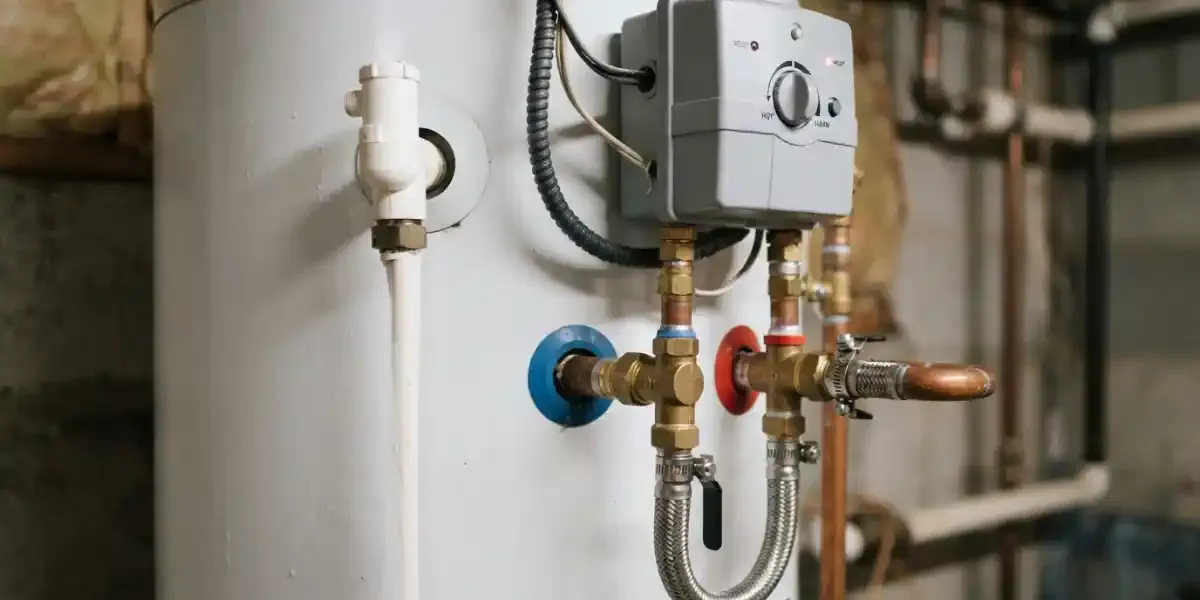
Water Heater Temperature and Pressure Relief Valve: Leaks, Tests and Replacement
The temperature and pressure relief valve is a safety device on your water heater. It opens if pressure or temperature climbs too high. If it drips, hisses or discharges, the cause is high pressure, high temperature or a worn valve, and a plumber should find out which. Never cap or plug it.
This guide explains how the valve works, how to test it and what its leaking means.
Why this valve matters
A water heater is a sealed vessel that heats water. If the thermostat fails and the water keeps heating, pressure climbs. The relief valve opens at a set limit and lets water out, which prevents the tank from rupturing.
That is why a valve that discharges is a signal, not a nuisance. Plugging or capping it removes the last safety layer, and it should never be done.
Why a relief valve leaks
Match the symptom to the cause.
| Symptom | Likely cause | What to do |
|---|---|---|
| Slow drip, tank otherwise normal | Worn valve seat or mineral buildup | Test the valve, replace if it keeps dripping |
| Drips after the heater fires | Thermal expansion pressure | Add an expansion tank |
| Hot water spurting | High temperature, failed thermostat | Shut off power or gas, call a plumber |
| Constant hissing | High water pressure at the supply | Test pressure, install a regulator |
| Valve is old or corroded | Age | Replace the valve |
How to test the valve
Place a bucket under the discharge pipe. Lift the lever briefly and let it snap back. Water should flow and then stop. If it does not stop, or if nothing flows, the valve is faulty and needs replacement.
Test once a year. Water coming out may be hot, so keep face and hands clear. If the valve is stuck and does not move at all, do not force it. A plumber can replace it, and you should shut off the water to the tank first.
Relief valve dripping?
Call and a plumber can find the cause.
Parts that go with a safe relief setup
The valve is only part of the safety setup.
- ✓A discharge pipe that runs downward to within a few inches of the floor or to a drain.
- ✓No valve or cap at the end of the discharge pipe.
- ✓An expansion tank where the supply has a check valve or pressure reducing valve.
- ✓A working thermostat and a safe temperature setting.
- ✓A drain pan in places where a leak would cause damage.
Replace the valve or look deeper
A leaking valve may be the symptom of a bigger issue.
Replace the valve when
- The valve is old and corroded
- It drips with no other symptoms
- The pressure and temperature are normal
- See water heater repair
Look deeper when
- The tank pressure is high
- The thermostat is stuck
- The unit is near end of life
- See water heater replacement
Water pressure from the Town and your heater
Brownsburg Water Utilities supplies the Town's water, and the property owner owns the line from the meter to the house. Pressure at your house is set by the supply and any regulator on the line.
If a relief valve drips after the heater runs, ask a plumber to check the incoming pressure with a gauge. The Town requires permits for some plumbing changes, and the building department at (317) 852-1120 can say how a relief valve or expansion tank replacement is handled.
Relief valves are certified to a national standard, ANSI Z21.22, and the Indiana Plumbing Code governs the size and termination of the discharge pipe.
Thermostat settings and scalding
A relief valve is the last safeguard, and the thermostat is the first. Most makers set heaters to around 120 degrees Fahrenheit, which reduces scald risk and slows scale. Water at 140 degrees can burn skin in seconds, a particular concern with children and older adults.
If you turn the temperature up for a dishwasher, check that the machine needs it. If the water seems hotter than the dial, the thermostat may be failing, and that is a reason to call a plumber before the relief valve has to open.
What affects the price of relief valve work
Valve replacement is small, and a pressure fix adds parts.
Insurance does not cover wear. A tank rupture that floods the house may be covered, so keep records. We serve Avon and the wider Brownsburg area from the same 24/7 line.
When to stop and call
If the valve is spraying hot water, the tank is rumbling loudly or the pipes are shaking, shut off the gas or power to the heater and close the cold water inlet. Do not touch the valve or the discharge pipe, because the water can scald.
Keep people and pets out of the room until a plumber has checked the unit. A relief valve that opens in anger is telling you the heater has already failed at a more basic job.
Relief valve questions
No. A steady drip means the valve or the system needs attention.
It is a modest job, but water at high temperature and pressure is dangerous, and the discharge pipe must be right. A plumber is safer.
Many last years, and a plumber may replace it with a new heater or if it fails a test.
Thermal expansion in a closed system. An expansion tank usually fixes it.
No. It may be scalding.