Emergency Leak Detection in Brownsburg, IN
Leak detection in Brownsburg, IN finds the exact spot where a hidden pipe is leaking, so the repair opens one small area instead of a whole wall or floor. If water is spreading, shut off the main valve and call our 24/7 line.
Call to ask about availability, nights and weekends included, with a clear price quoted first.
When a hidden leak cannot wait
Some leaks drip for months. Others flood a floor in an afternoon. The difference is the pressure behind the pipe and what it is wetting, and when the damage is spreading you should not wait for the next opening.
Call the 24/7 line, and take the steps below to limit damage while you wait.
Start with the symptom: meter running, bill up, damp spot or warm floor
Most people do not start with the words leak detection. They start with a number or a stain. The water meter keeps turning when every tap is off. The bill doubles with no change in habits. A ceiling stains in a ring. A patch of floor feels warm. A faint hiss comes from a wall. Each of those is a symptom, and each has a method behind it.
A quick test you can do yourself: turn off every water use, then watch the small triangle or dial on the meter. Movement means water is going somewhere. Take a photo and call.
How we pinpoint a hidden leak
The tools match the pipe and the location.
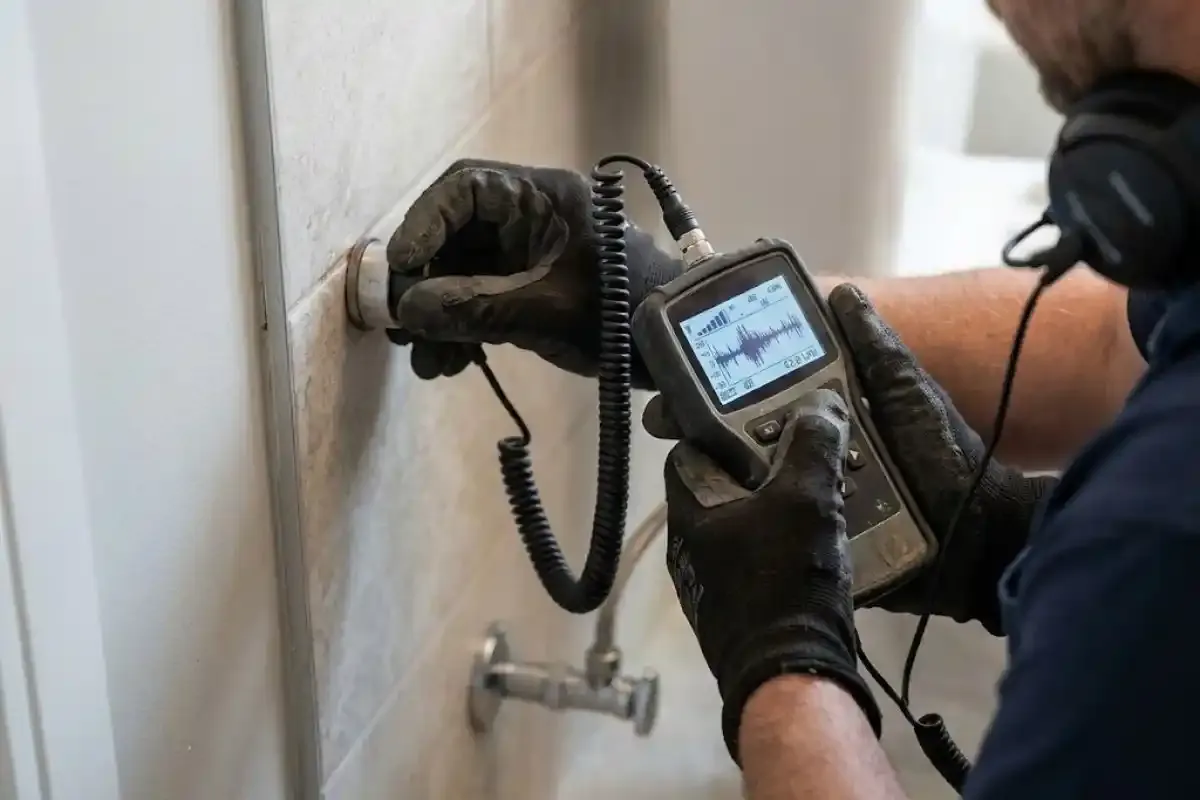
- ✓Acoustic listening: sensitive microphones pick up the sound of water escaping from a pressurized pipe.
- ✓Thermal imaging: shows temperature differences from hot-water leaks or wet insulation behind a wall.
- ✓Pressure testing: isolates sections of the supply line to find which one is losing pressure.
- ✓Tracer gas or dye: used for stubborn leaks that do not make noise.
Ceiling, wall and crawlspace leaks
A stain on a ceiling usually sits below the problem, not at it. Water travels along joists and pipes before it shows. Finding the source means working backward from the stain, checking the bathroom above, the supply lines and the vent pipe.
For homes with crawlspaces, a leak under the floor can run for weeks before anyone notices. Damp insulation, musty odors and a rising bill are signals. If the leak is in a supply line from the street, see water service line repair. If the pipe is burst, burst pipe repair covers the next step.
What leaks look like and where they usually sit
This table helps you decide which symptom you are dealing with.
| Sign | Likely source | First check |
|---|---|---|
| Meter moves with everything off | Supply line or fixture | Toilet flapper, outdoor spigot, then the line |
| Warm spot on floor | Hot water line in slab or floor | Call for acoustic and thermal check |
| Ceiling stain | Bath or supply above | Trace upward and inspect |
| Musty crawlspace | Drain or supply leak | Look for wet insulation and drips |
| Bill rise only | Slow leak or running toilet | Meter test, then fixtures |
Meter moving with everything off?
Call to book a leak detection visit and stop the guessing.
Water bills and service lines in Brownsburg
Brownsburg's Water Utilities Department supplies drinking water from eight wells in the White River Basin, plus about 400,000 gallons per day bought from Citizens Energy Group. The Town owns the meter and meter pit.
The property owner owns the line from the meter to the house and pays for repairs on it. That makes the section between the meter and your foundation your responsibility, and the first place to check when the meter runs with everything off.
What affects the price of leak detection
Detection is priced for the search, and repair is quoted separately once the leak is found.
Many policies cover sudden pipe breaks but not slow leaks or the cost of finding them. If damage is already present, call your insurer before repairs and take dated photos.
Guidance on water waste and leaks
According to the EPA WaterSense program, household leaks can waste nearly 10,000 gallons of water in a year, and a faucet leaking one drip per second wastes more than 3,000 gallons annually. Fixing leaks early is guidance every utility repeats.
What to do when you find a leak
A few steps limit the damage until a plumber arrives.
- ✓Shut off the water at the main or at the fixture stop.
- ✓Turn off power to wet areas if you can reach the breaker safely.
- ✓Move belongings away and put towels or a bucket in place.
- ✓Take dated photos for an insurance claim.
- ✓Call the 24/7 line and describe where the water is.
Leak detection questions
Yes. Call at any hour. For active water damage, shut off the main and tell the dispatcher what you see so the right visit is scheduled.
Not to find it. Acoustic and thermal tools locate the leak from the surface. Only the repair opens the wall, and it opens the smallest area possible.
Start with toilets, which can run silently, then outdoor spigots and irrigation. If the meter moves with everything off, the leak is in the supply line or inside a wall.
Yes, with acoustic and thermal methods, and repair options include rerouting the line. See repiping for when replacing the line makes more sense than patching it.
Coverage varies. The leak itself may be covered if it was sudden. Detection costs are sometimes included as part of a claim, so ask your insurer.