Basement Waterproofing in Brownsburg, IN
Basement waterproofing in Brownsburg, IN keeps water out of the lower level with interior drains, sump pits and drainage fixes outside the foundation. It starts with finding where the water comes from, and ends with a system that handles it.
Call to book a visit, and expect a clear price before work starts.
What waterproofing means, and what it does not
Waterproofing manages water that reaches the foundation. It does not stop rain from falling or the ground from becoming saturated. It gives that water a path to a sump pit and out of the house before it reaches your floor.
There are two approaches, and many jobs use both. Exterior work keeps water away from the wall. Interior work catches what gets through and pumps it out. The right mix depends on how the water is entering.
Where basement water comes from
Diagnosis comes first, because each source has a different fix.
| Source | How it shows | Typical fix |
|---|---|---|
| Surface runoff | Water after rain near a wall | Grade, gutters and downspout extensions |
| Wall cracks | Seepage or streaks on concrete | Crack repair and interior drain |
| Floor-wall joint | Water at the edge of the slab | Interior drain tile and sump |
| Rising groundwater | Water coming up through the floor | Drain system plus a strong sump pump |
| Plumbing leak | Water that does not follow rainfall | See leak detection |
Wet basement after every storm?
Call to book a moisture diagnosis and get a clear price.
Simple steps that help before any construction
Many wet basements improve with outside fixes alone.
- ✓Extend downspouts at least several feet from the foundation.
- ✓Slope the soil away from the house so water runs off, not in.
- ✓Clean gutters before the rainy season.
- ✓Keep window wells clear of leaves and covered.
- ✓Test the sump pump twice a year, see sump pump service.
Interior drainage: how a system is built
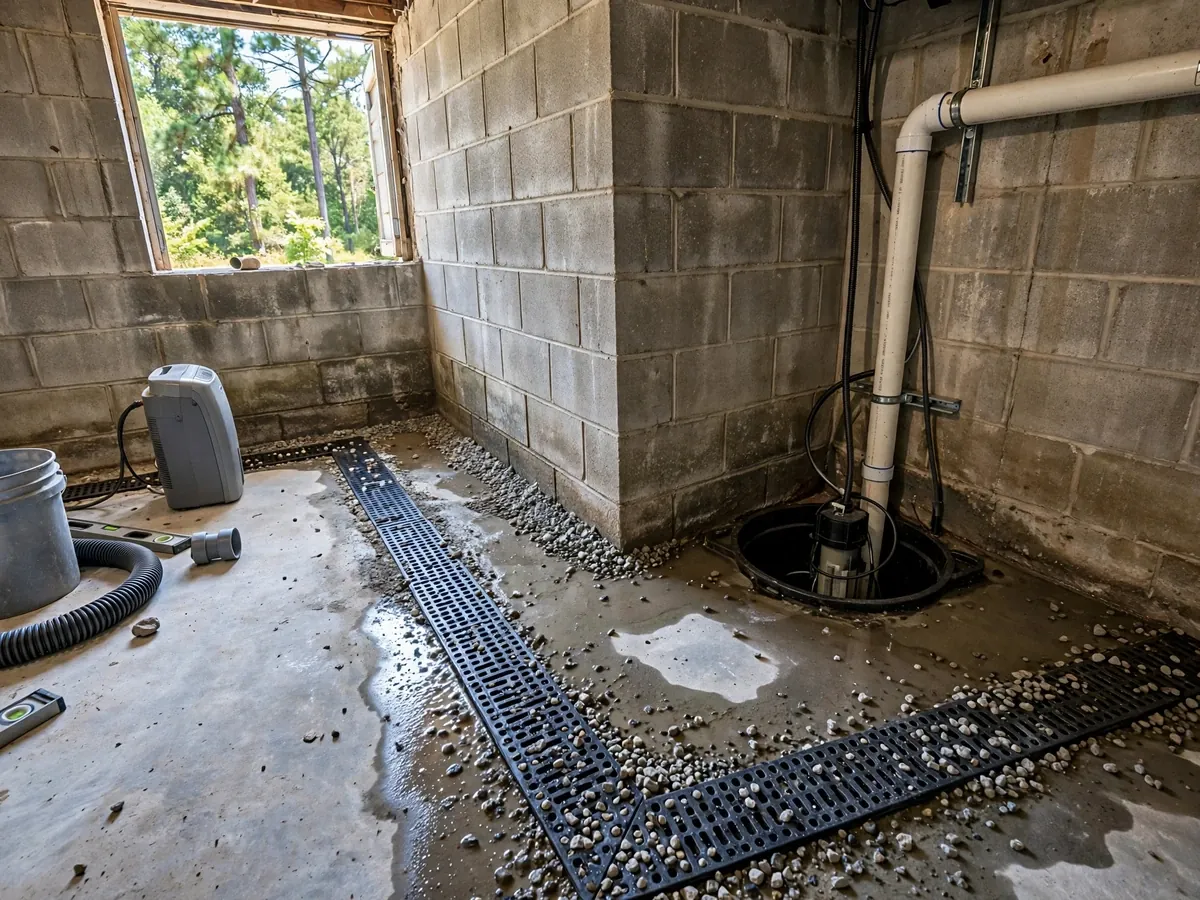
A perimeter drain is installed at the edge of the basement floor. A channel is cut in the slab, drain pipe is laid in gravel, and the concrete is patched. Water that enters at the wall or floor joint flows into the pipe and to the sump pit, where a pump sends it outside.
It is invasive work inside the house, but it takes the pressure off the walls and handles both seepage and groundwater. Good systems include a check valve, a backup pump and a clean-out so they can be maintained.
Soil, storms and Indiana basements
Central Indiana soils include clay, which drains slowly and holds water against foundations after rain. Spring storms and a rising water table are the usual triggers for basement water in Hendricks County.
That pattern is why a wet basement is often a seasonal problem. If it appears only after heavy storms, fix the outside water path first. If water shows up even in dry weather, groundwater or a plumbing leak is more likely.
What affects the price of waterproofing
The scope drives the quote, and the diagnosis sets the scope.
Policies often exclude groundwater and seepage. Sudden water from a burst pipe is different. Review your policy and ask about a water backup endorsement.
Guidance on moisture and mold
According to EPA guidelines, water-damaged materials should be dried within 24 to 48 hours to prevent mold growth, and indoor humidity should be controlled. Drain and pump work follows the Indiana Plumbing Code, and sump discharge should be routed as that code allows.
What to do when water is entering the basement
Quick action limits damage while you wait for a longer-term fix.
- ✓Stay out of standing water if outlets, appliances or the panel are nearby.
- ✓Lift boxes, electronics and furniture off the floor.
- ✓Clear the sump pit and check that the pump is running.
- ✓Run a wet vacuum or buckets to move water toward the drain.
- ✓Photograph the damage, then call a plumber for the cause.
Basement waterproofing questions
Groundwater follows rain. A plumbing leak shows up in dry weather as well. A meter test, described on our leak detection page, helps tell them apart.
Yes. Interior drain systems are installed from inside, though exterior work can be needed for some wall problems.
It stops the moisture that causes it. Existing mold or damp materials need to be cleaned or dried by a separate trade.
Almost always. The drain collects the water, and the pump moves it out.
A dry basement is easier to sell, and a documented system with a transferable warranty can help. Ask for the warranty terms in writing.