Emergency Sump Pump Repair in Brownsburg, IN
Sump pump installation and repair in Brownsburg, IN keeps groundwater out of your basement. If water is rising in the pit or the pump will not start, call our 24/7 line and keep valuables off the floor.
Call to ask about availability, with a clear price before work begins.
Basement taking on water: the first steps
Pumps tend to fail on the worst day, when the ground is saturated and the pit fills fast. A pump that has quit leaves you minutes, not hours.
Call our 24/7 line, and do the following.
How a sump pump works and why it fails
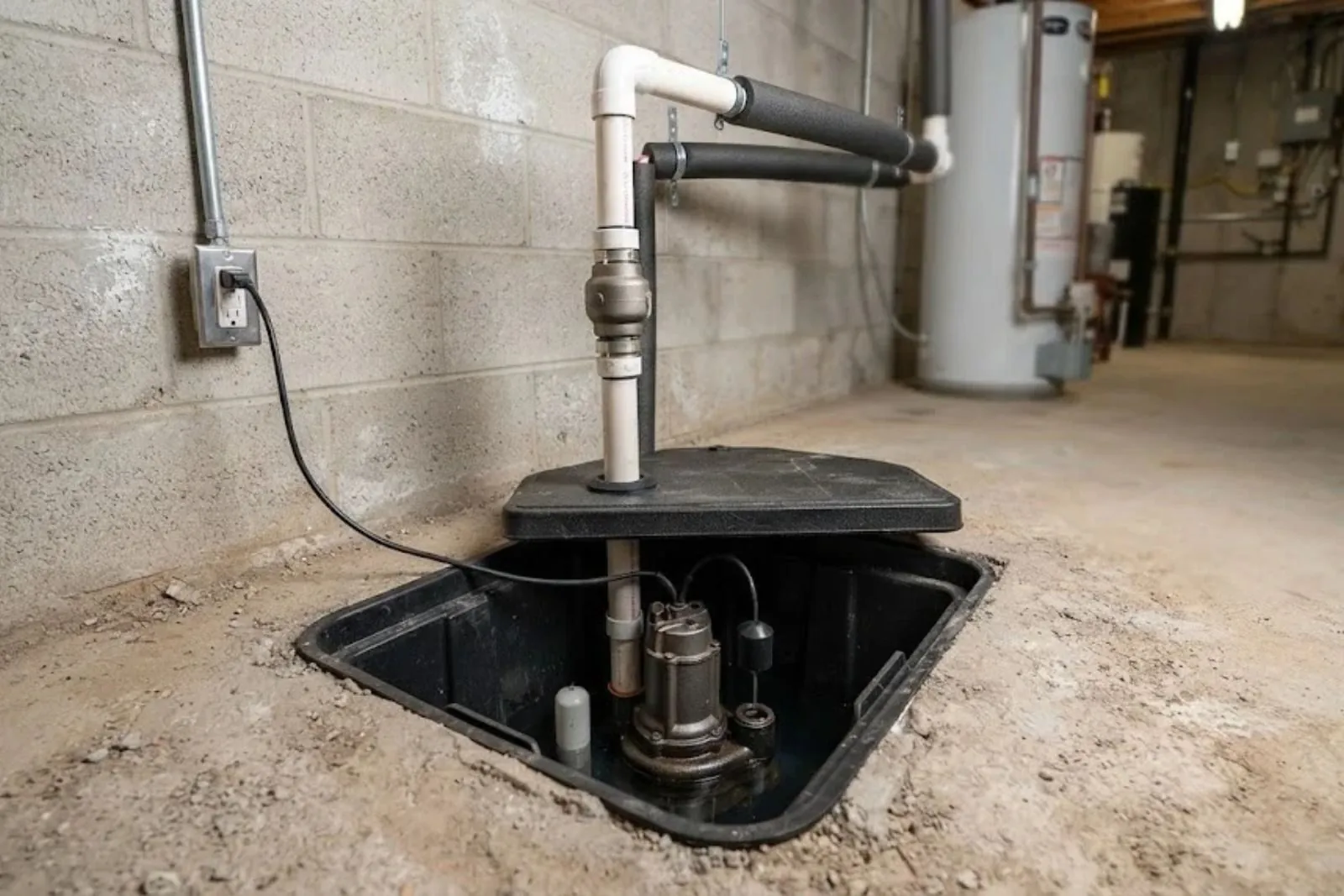
A sump pit sits at the lowest point of the basement. When groundwater fills it, a float switch lifts and turns on the pump, which sends water outside through a discharge pipe. When the level drops, the float falls and the pump stops.
Failures come from a stuck float, a burned motor, a clogged intake, a failed check valve, a frozen or blocked discharge pipe, or a power outage during the storm that caused the flooding. Pumps run only when it is wet, so many sit untested for years.
Primary pump and backup pump
A second line of defense matters because storms and outages come together.
Primary pump
- Runs on house power
- Handles normal groundwater
- Typical life of about 7 to 10 years
- Test twice a year
Backup pump
- Battery or water-powered
- Starts when the primary fails or power goes out
- Protects during storms
- Battery needs replacement every few years
Troubleshooting a pump that is not working
Start with the simplest causes.
| What you see | Likely cause | What to do |
|---|---|---|
| Does nothing, pit full | No power or stuck float | Check outlet and float, then call |
| Runs but moves little water | Clogged intake or failed impeller | Service or replace |
| Runs constantly | Stuck float or failed check valve | Adjust or replace |
| Loud rattling | Worn bearings or debris | Inspect and replace |
| Frozen discharge | Ice in the pipe outside | Thaw and reroute |
Pit filling and the pump is silent?
Call now, and keep valuables off the floor.
Rain, groundwater and Brownsburg basements
Central Indiana gets heavy spring storms, and a high water table can push groundwater against basement walls. Newer subdivisions with sump systems tied into the storm drain or discharged to the yard depend on the pump working during those same storms.
Check where your discharge pipe empties. It should carry water well away from the foundation, not back toward it. If your pit has no backup, our basement waterproofing page covers the next step.
What affects the price of sump pump work
Repairs are small, and new systems take more.
Standard policies often exclude groundwater and sump pump failure unless a water backup endorsement is added. Ask your agent before the rainy season.
Standards for sump systems
Sump pumps are installed to manufacturer instructions and the Indiana Plumbing Code, and electrical connections follow the National Electrical Code, which calls for protected outlets in damp areas. Discharge should never be tied into a sanitary sewer line.
Sump pump questions
Yes. Call any hour, especially during storms. Tell the dispatcher how high the water is in the pit.
Twice a year is a good habit. Pour a bucket of water into the pit and watch the float lift and the pump start and stop.
Many last 7 to 10 years, less if they run constantly. Age is a reason to replace before a storm, not after.
If a flooded basement would cost you much, yes. Power often fails during the same storms that fill the pit.
No. A pit pump handles groundwater. If a pipe is leaking, see burst pipe repair.