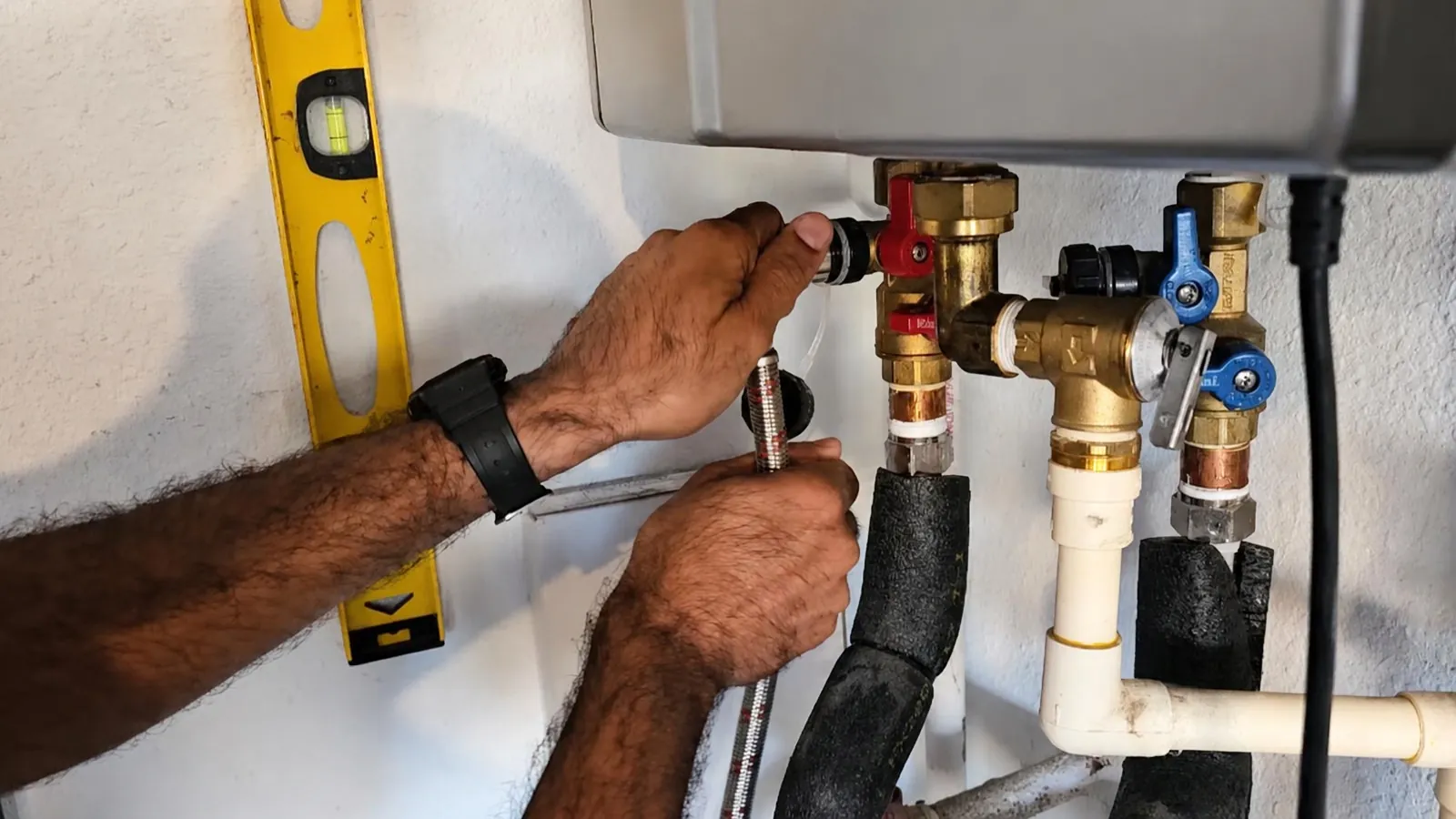
Tankless Water Heater Recirculation Pumps: Do Brownsburg Homes Need One?
A recirculation pump moves hot water through your pipes so it is ready at the tap, and it cuts the long wait for hot water that tankless heaters can leave at distant fixtures. It is worth considering when the farthest bathroom is far from the heater, and when wasted water bothers you.
This guide explains how it works, the types, and the questions to ask before adding one.
Why tankless units still make you wait
A tankless heater makes hot water fast, but the water still has to travel through the cold pipe between the heater and the tap. If that run is long, you wait while the cold water drains out. Some tankless systems add a short delay of their own, because the burner needs flow to start.
A recirculation system keeps warm water moving so it is near the tap. That cuts the wait and the wasted water, at the cost of electricity and some added heat loss.
Types of recirculation systems
Each type fits a different house.
| Type | How it works | Trade-offs |
|---|---|---|
| Dedicated return line | A separate pipe carries water back to the heater | Best performance, needs a return line |
| Crossover valve under the farthest sink | Uses the cold line as a return | Easy retrofit, cold line runs warm |
| Built-in tankless buffer | Heater includes a small tank and pump | Fewer parts, model dependent |
| Timer or demand control | Runs the pump on schedule or with a button | Saves energy compared to constant running |
Questions to ask before adding a pump
A few answers decide the right system.
- ✓How long is the wait at the farthest fixture today?
- ✓Does the house have a dedicated return line?
- ✓Does your tankless heater support recirculation, and which pump does the maker recommend?
- ✓Do you want a timer, a motion sensor or a push button control?
- ✓Can the pump and controls be installed near a power outlet?
Tired of waiting for hot water?
Call and we will check your pipes and heater.
Energy and cost trade-offs
A pump that runs all day keeps pipes warm and loses heat. Timers and demand controls cut that loss. A system that waits for a button press uses the least energy but gives you the longest wait.
Insulating hot lines reduces heat loss in any system. In a cold basement or crawlspace, that is cheap and effective.
Is a recirculation pump the right fix
It is not for every house.
It makes sense when
- The run to the far bath is long
- You hate the wait and wasted water
- The house has a return line or room for a crossover
- The heater supports it
Think again when
- The heater is close to the fixtures
- You want the lowest energy use
- Water in the pipes is already warm quickly
- A tankless service visit might solve the problem instead
Hard water and recirculation systems in Brownsburg
Brownsburg draws groundwater from eight wells in the White River Basin, and groundwater carries minerals. Scale can foul a pump and a tankless heat exchanger. A pump that moves hot water through a scaled system does not help.
A yearly flush of the tankless unit is a sound habit, and a softener or scale filter protects the system. Our softener and filtration page covers options. Ask the installer how the pump is flushed.
Pump and control choices should follow the heater maker's standards, and the U.S. Department of Energy notes that insulating hot water pipes saves heat.
Sizing the pump and the pipes
A recirculation pump is chosen for the flow the loop needs, not for the biggest number on the box. A small pump moving a slow, steady flow through insulated pipe keeps water warm without much noise or energy. An oversized pump can wear fittings and make the loop noisy.
The length and diameter of the run decide the pump size. A plumber measures the loop, checks whether the pipes are insulated and then picks a pump and a control. Ask for the pump curve if you are curious, and for the heater maker's recommendation if the warranty depends on it.
What affects the price of a recirculation pump install
A crossover valve costs less than a dedicated return.
Utility rebates may exist for efficient hot water systems. Check with your supplier, since offers change. We serve Avon and the wider Brownsburg area from the same 24/7 line.
Controls and habits that cut waste
Timers run the pump during the morning and evening hours when your household uses hot water, and rest it overnight. Motion sensors start it when you enter a bathroom. Push buttons start it only when you ask.
Each control trades convenience for savings. A timer is simple and cheap. A button is the most frugal and the least convenient. Try the timer first, then adjust the windows after a week of watching how you actually use hot water.
Whatever you choose, insulate the hot water lines you can reach, because warm water in a bare pipe loses heat constantly and makes the pump work harder to compensate.
Recirculation pump questions
It uses some electricity and can lose heat from pipes. A timer or demand control limits the effect.
Often yes, depending on the model. A plumber checks the manual and the piping.
It keeps water warm in the pipe. The temperature at the tap depends on your heater setting.
Cold basements and exterior walls lose heat from lines, so insulation matters. State winter advice also stresses keeping pipes warm.
Quality pumps are quiet. Placement away from bedrooms helps.