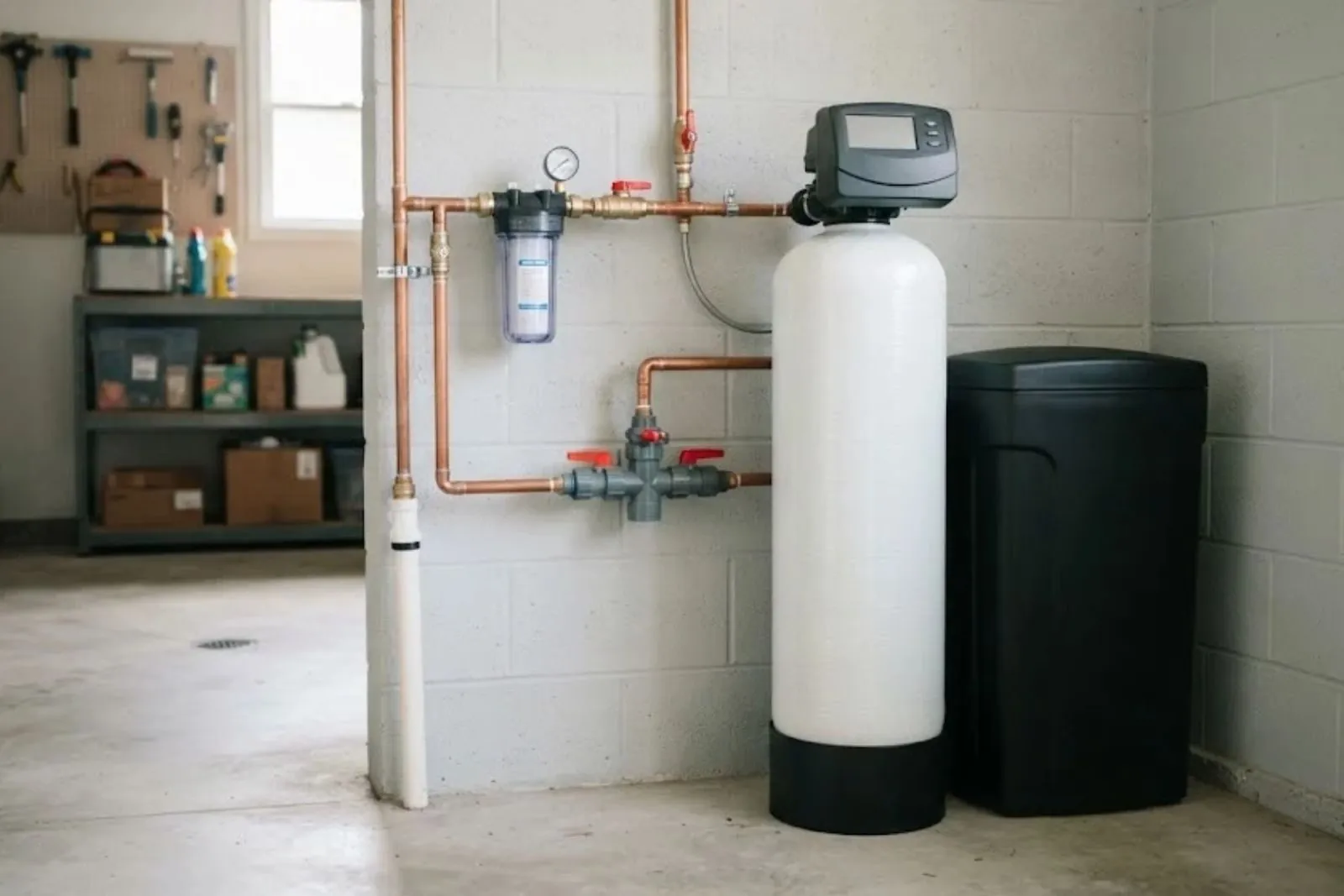
Water Softener and Filtration in Brownsburg, IN
Water softener and filtration service in Brownsburg, IN covers installing, repairing and tuning softeners, carbon filters and whole-house systems. They protect fixtures, water heaters and appliances from mineral scale and improve taste.
Call to book a visit, and expect a clear price before any equipment is ordered.
What hard water does to a house
Hard water carries dissolved calcium and magnesium. When it is heated or evaporates, those minerals leave scale. You see it as white crust on faucets, spots on dishes and glass, soap that will not lather and shower heads that clog.
The hidden cost is inside. Scale coats water heater elements and tank bottoms, narrows pipes and shortens the life of dishwashers and washing machines. A water treatment system is cheaper than replacing those items early.
Softener or filter: they do different jobs
Many homes benefit from both, but they solve different problems.
Water softener
- Removes calcium and magnesium
- Stops scale and spotting
- Uses salt or potassium for regeneration
- Needs a drain and a power outlet
Whole-house filter
- Removes sediment, chlorine taste and odor
- Carbon, sediment or specialized media
- Cartridges replaced on a schedule
- Does not soften water
Matching a symptom to a treatment
This helps you pick the right equipment, and a water test confirms it.
| Symptom | Likely cause | Typical treatment |
|---|---|---|
| White scale and spots | Hard water | Softener |
| Cloudy or gritty water | Sediment | Sediment filter |
| Chlorine taste or smell | Disinfection residual | Carbon filter |
| Rotten egg smell | Hydrogen sulfide | Specialized filter, water test first |
| Orange stains | Iron | Iron filter or softener with iron capacity |
Seeing scale everywhere?
Call to book a water test and a treatment plan.
Groundwater in Brownsburg
Brownsburg Water Utilities draws its water from eight wells in the White River Basin, with additional supply purchased from Citizens Energy Group. Groundwater picks up minerals as it moves through rock, so hardness is a normal feature of central Indiana water.
Your own taps tell the truth better than a regional average. A simple hardness test strip or a plumber's test gives you the number to size a softener. Utilities publish annual water quality reports, and the Town can direct you to Brownsburg's.
What a softener installation includes
A proper install covers more than setting the tank.
- ✓A bypass valve so the system can be isolated without shutting the house down.
- ✓A drain connection with an air gap, and a place for the brine overflow.
- ✓A power outlet or a dedicated circuit for the controller.
- ✓Programming for your water hardness and household size.
- ✓Protection for the water heater, which benefits most from softened water, see tankless units especially.
Salt, potassium and brine drains
A softener recharges with a salt brine, then flushes the brine to a drain. Most homes use sodium chloride, and some use potassium chloride at a higher price for those who prefer to limit sodium. The brine must drain somewhere legal and safe, usually a laundry standpipe or floor drain, with an air gap.
Ask your plumber how the brine drain is arranged and where the overflow goes. A softener that discharges to a septic system or a sump needs a separate plan, so tell the installer what your house has.
What affects the price of water treatment
The equipment and the layout drive the quote.
Treatment equipment is not covered by insurance. Some appliance warranties do depend on scale control, so check yours.
Certification standards for treatment equipment
Look for NSF/ANSI certification on treatment equipment. NSF/ANSI 44 covers cation exchange softeners, and NSF/ANSI 42, 53 and 58 cover filters for taste, health-related contaminants and reverse osmosis. Certification is the way to compare claims.
What to do before servicing a softener or filter
A few safety steps prevent leaks and injuries.
- ✓Put the system in bypass or close the supply valves before opening any housing.
- ✓Unplug the softener controller before working near it.
- ✓Wear gloves and eye protection when handling salt and cartridges.
- ✓Keep the brine tank lid closed and never mix chemicals in it.
- ✓Call a plumber if a valve will not close or a housing leaks.
Water softener and filtration questions
Softened water contains a little added sodium or potassium from the exchange process. Many people drink it. If you are on a sodium-restricted diet, ask your doctor, and a separate drinking water tap can be installed.
Check monthly and keep the brine tank at least a quarter full. Heavier use means more frequent refills.
Often. Common causes of trouble include a clogged injector, a stuck valve, a bridged salt tank and a failed controller.
No. A filter removes particles and taste. A softener handles hardness. See water heater repair for how scale affects a heater.
It does not change usage, but it reduces scale damage to fixtures and appliances.